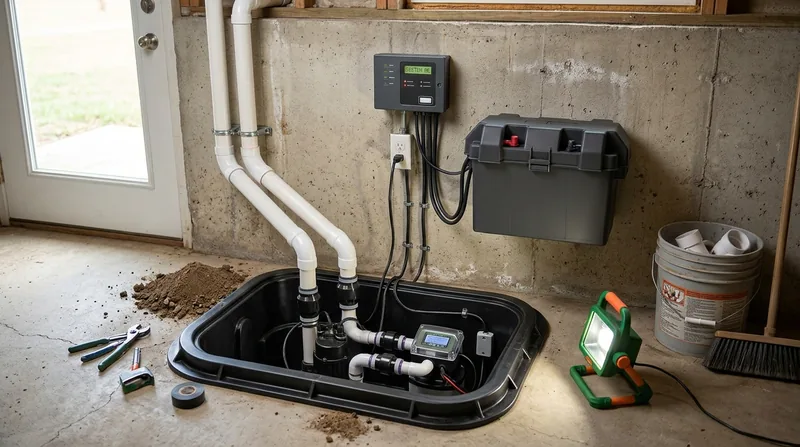




When the grid drops during a spring storm on the West Bluff, your primary sump pump stops with it. That is the exact moment water is already climbing the walls of a 1920s brick bungalow in Averyville or pushing up through a poured floor in Northwoods. Battery Backup Sump Pumps in Peoria keep the pit dry when the power does not, running on a charged battery and a separate float switch so the pump that matters most is the one still working. Our loess silt over glacial clay drains slowly, and the Illinois River high water in wet springs pushes the water table up into low basements across South Peoria and Bartonville. A backup pump is not a luxury add-on here. It is the second line of defense behind your primary pump, and it buys you hours when a summer storm knocks out power for the whole block. Call (309) 322-9378 and we will size one to your pit, not to a shelf label. Start with a sump pump installation and replacement review if your primary pump is already old.
Why a Backup Pump Earns Its Place in Peoria Basements
The failure mode that dominates here is a hard summer storm that cuts power right as the sump basin fills. Peoria sits on windblown loess over glacial clay, and that clay holds water in wet springs, so the pump runs long cycles and the basin refills fast. Add snowmelt and Illinois River high water in March and April, and a primary pump that quits during an outage has no second chance. In the older brick and stone basements downtown and in Richwoods, the backup pump is what keeps a wet basement from becoming a finished-floor loss.
- We install a separate DC backup pump with its own float switch, so a dead primary pump does not stop the backup.
- We size the battery to your pit volume and your typical run cycle, not to a one-size chart.
- We wire an alarm that sounds when the battery drops or the backup float lifts, so you hear it before the floor is wet.
- We check the check valve and discharge line, because a backup pump pushing against a stuck check valve is just noise.
A backup pump does not fix a failed drain tile system, but it keeps the basin from overflowing while you schedule the real repair.
Key info: In Peoria Heights and along the West Bluff, runoff drops fast toward the walls on steep ground, so the sump runs harder during a storm than on the flats. That is exactly when the grid is most likely to fail, which is why we recommend a backup on bluff-side homes even when the primary pump is new.
For the official word on what your jurisdiction requires for discharge and drainage work, check the City of Peoria's building and permitting pages at peoriagov.org before you schedule anything.
How We Install a Backup Pump in a Peoria Basement
We start by looking at the pit, the primary pump, and the discharge line, because a backup pump is only as good as the basin it sits in. On a 1950s ranch in North Peoria with a partly finished basement, that often means a second float and a clean check valve. On a 1990s poured basement in Dunlap, it usually means a battery box mounted off the floor and a dedicated alarm. We test the backup under load with the primary unplugged before we call it done.
- We inspect the sump basin, the primary pump intake, and the check valve for debris or a stuck flapper.
- We set the backup pump and its float at the right height so it lifts before the water reaches the floor joint.
- We mount the battery and charger off the floor and away from the discharge spray.
- We tie the backup discharge into the existing line with its own check valve so the two pumps do not fight each other.
- We test with the primary unplugged, confirm the alarm sounds, and walk you through the monthly test button.
If the basin itself is undersized or the drain tile is silted shut, we say so and point you to drain tile repair and replacement rather than sell a backup pump that will cycle dry.
Key info: A Pekin homeowner called after a July storm took out power for six hours. The primary pump was fine, but the basin filled twice. We added a DC backup with a group 27 battery and an alarm, and the next outage the backup ran the cycle on its own. That is the whole point of the system.
Backup Pump Approaches We Use
Not every basement needs the same setup. A stone foundation in Downtown Peoria with a shallow pit takes a different pump and float than a deep poured basin in Morton. We match the approach to the pit, the primary pump, and how often the basin actually fills during a wet spring.
| Approach | Description | Best for |
|---|---|---|
| DC battery backup pump | Separate 12V pump with its own float and battery, tied into the existing discharge line. | Most Peoria basements with a working primary pump and a standard basin. |
| Combination primary and backup unit | One housing with an AC primary and a DC backup, shared float logic. | Older pits where space is tight and the primary pump is due for replacement. |
| Battery plus alarm package | Backup pump with a high-water alarm and a low-battery chirp you can hear upstairs. | Finished basements and homes where nobody is home during the day. |
| Dual-battery extended runtime | Two batteries in parallel for longer outages and heavier run cycles. | Bluff-side homes and low basins that cycle hard during spring storms. |
We will tell you when a single battery is enough and when the pit calls for the extended runtime, because overselling a second battery helps nobody.
Battery Backup Sump Pumps Cost in Peoria: What to Expect
Most backup pump installs here start at From $900 for a DC pump, a battery, a charger, and the tie-in to your existing discharge line. That figure moves with the pit, the battery size, and whether the discharge line needs a new check valve or a reroute. A combination unit or a dual-battery setup sits higher, and a pit that needs cleaning or a new basin adds labor. We give you a written number after we see the pit, not a phone guess.
The factors that move the price are the battery group size, whether the discharge line needs work, the height of the run, and whether we are adding an alarm. Access matters too: a pit tucked behind a finished wall in a Washington basement takes longer to reach than an open one. Get two or three estimates and compare what is actually included, because a low number that skips the check valve is not a lower price, it is a shorter job. Our full pricing overview lays out the ranges so you can compare line by line.
Hiring a Backup Pump Contractor Near Peoria: What to Check
Ask for the license and insurance certificate before anyone touches the pit, and confirm the coverage is current for the company actually doing the work. Get the estimate in writing with the battery size and pump model named, not just a lump sum. Ask for two local references from jobs like yours, and call them. If the work alters the sump discharge connection, ask who pulls the permit and confirm the rule with the local building department, because thresholds vary by jurisdiction.
A contractor who cannot tell you the difference between a backup pump and a primary replacement is not the one to hire. We are a dedicated basement waterproofing specialist, not a general foundation firm or a plumber, and we will say plainly when your primary pump is the problem and a backup will not save it. Reach us through the contact and free estimate page and we will set a time to look at the pit.
Battery Backup Sump Pumps in Peoria: Pricing Guide
| Service | Price | Details |
|---|---|---|
| DC backup pump with battery | Starting at $900 | Includes 12V backup pump, battery, charger, float, and tie-in to existing discharge line. |
| Combination primary and backup unit | Starting at $1,250 | One housing with AC primary and DC backup, best when the primary pump is due for replacement. |
| Dual-battery extended runtime | Starting at $1,450 | Two batteries in parallel for longer outages and heavier spring run cycles on bluff-side homes. |
| Complex or large-scale job | On estimate | Pit cleaning, new basin, discharge reroute, or access behind a finished wall needs an on-site look. |
| Travel | Included | In Peoria and surrounding areas, no separate call-out or mileage fee. |
| Estimate | Free | Response within 24h at (309) 322-9378, no obligation to book. |
Indicative pricing, the exact cost depends on square footage, finish, and site access. Free personalized estimate within 24h at (309) 322-9378.


