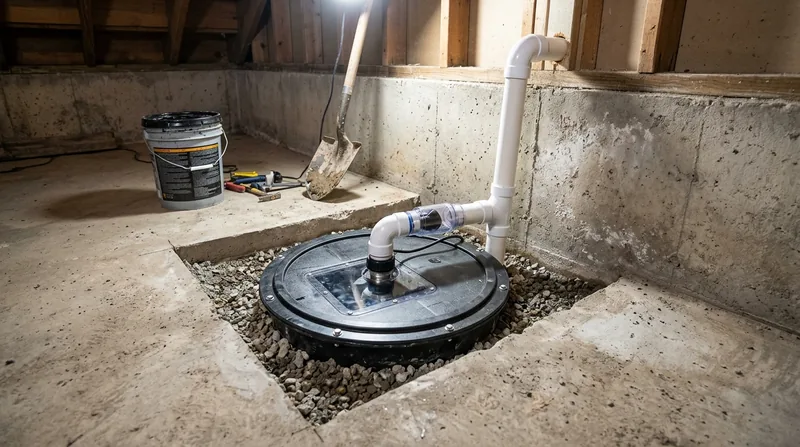




If you own a home in Peoria, you already know how fast water can find a low spot. The flats across North Peoria and South Peoria sit on windblown loess silt over glacial clay, and that clay drains slowly, so a wet spring pushes the water table up into every unsealed sump basin it can reach. Sump Pump Installation & Replacement in Peoria is the work we do most between March and June, when snowmelt and hard spring rain stack on top of each other. The bluffs on the west side of the Illinois River, including West Bluff and Peoria Heights, send runoff downhill fast toward the walls, and the river itself runs high enough some springs to back up footing drains in the lowest blocks. A pump that is undersized, sitting in a cracked basin, or wired to a discharge line that freezes in January will not keep up. We size the pump to the actual inflow, seal the basin, set the check valve correctly, and route the discharge so it dumps well away from the foundation. If your pump is cycling constantly or you are bailing by hand, start with a free basement inspection so we can measure the inflow before we quote hardware.
Key info: A 1890s brick bungalow in Averyville with a stone foundation and a hand-dug pit needs a different pump and basin than a 1990s poured-wall ranch in Northwoods. We spec both, but we do not quote the same number for both.
Why Sump Pump Failure Is the Number One Basement Call in Peoria
Most of the wet basements we open in Peoria are not cracked walls. They are pumps that quit, basins that filled with silt, or discharge lines that froze and dumped water back against the footing. The building stock drives this. Homes from the 1890s through the 1930s in Downtown, Richwoods and Averyville were built with full basements of stone, brick or early poured walls, and many of those pits were cut by hand and never sealed. The 1940s to 1960s brick cottages and ranches across North Peoria and South Peoria often have a pump that was added later, tied into a shallow pit with no lid. When the spring water table rises, that pit overflows before the float ever trips.
- The pump is undersized for the inflow, so it runs continuously and burns out its motor in a single wet season.
- The basin is unsealed or cracked, which lets silt and gravel in and jams the impeller.
- The check valve is missing or installed backward, so water drains back into the pit and the pump short-cycles.
- The discharge line runs flat to grade or into a spot that freezes, and the pump deadheads against ice in January.
- The float switch sticks against the basin wall, and the pump never starts during the storm that matters.
Any one of those will put water on your floor. Two of them together will do it on the first heavy rain of April. The fix is not a bigger pump alone. It is a sealed basin, a correctly sized pump, a check valve that holds, and a discharge that gets water far enough from the wall that it never comes back.
Key info: In Peoria Heights and along the West Bluff, runoff drops fast down the slope and hits the wall within minutes of a summer storm. A pump sized for slow seepage will lose that race. We size for peak inflow off the bluff, not the average.
If you want the official word on what your jurisdiction requires before we touch the discharge routing, start with the City of Peoria building department. Rules vary by jurisdiction, and we verify before we pull anything.
How We Install or Replace a Sump Pump in a Peoria Basement
We do not swap a pump and leave. The pit, the lid, the valve and the discharge all have to work together, or the new pump inherits the old failure. The sequence below is what a typical replacement looks like in a Peoria home with an existing pit. A new pit in a basement that never had one takes longer, because we cut and set the basin and tie it to the interior perimeter drain if one is present.
- We measure the actual inflow by watching the pit through a rain event or by filling and timing it, so the pump is sized to the water, not to a guess.
- We pump out and clean the basin, then inspect the walls and floor for cracks and silt intrusion before anything new goes in.
- We set or replace the basin with a sealed lid, which keeps debris out and stops the pit from becoming a moisture source in the basement.
- We install the pump on a solid base, set the float switch clear of the wall, and fit a check valve so water cannot drain back.
- We run the discharge line to a freeze-protected outlet that dumps well away from the foundation, with slope so it drains dry.
- We test through a full cycle and a simulated high-water event, then walk you through what to check before the spring thaw.
If the pit sits inside an existing interior drain system, we tie the new basin into that system so the perimeter water reaches the pump. That detail is where a lot of replacements go wrong, and it is why we look at the interior drain tile system around the pit before we quote.
Key info: A ranch in Northwoods with a partly finished basement had a pump that ran every 40 seconds during the April thaw and still left an inch of water. The basin was unsealed and the discharge ran into a frozen downspout line. We reset the basin, sealed the lid, and rerouted the discharge to a gravity outlet. The pump now runs on a normal cycle.
Approaches We Use for Sump Pump Installation & Replacement in Peoria
Not every basement needs the same hardware. A stone-foundation bungalow in Averyville and a 2000s walkout near Dunlap have different inflow patterns, different pit conditions and different discharge options. The table below shows the approaches we actually install and when each one is the right call.
| Approach | Description | Best for |
|---|---|---|
| Full replacement with sealed basin | We pull the old pit, set a new sealed basin with a lid, and install a correctly sized pump and check valve. | Cracked or silted pits and pumps that have already failed |
| Pump swap on a sound pit | We replace the pump and float on a pit that is sealed and clean, and verify the check valve and discharge. | Ages 1970s to 2000s poured basements with intact pits |
| New pit in a basement with no pump | We cut and set a new basin, tie it to the footing drain or interior perimeter drain, and route the discharge. | Older Peoria homes with a wet floor and no existing pit |
| Freeze-protected discharge routing | We reroute the line to a gravity outlet or a frost-free termination with correct slope. | Pumps that deadhead against ice in January and February |
| Battery backup addition | We add a backup pump and battery on the same basin so a power outage does not stop the pump during a storm. | Homes that lose power in summer storms off the bluffs |
We pick the approach from the inflow and the pit condition, not from a price sheet. If a pump swap will hold, we say so and skip the excavation.
Sump Pump Installation & Replacement Cost in Peoria: What to Expect
Most sump pump replacements in Peoria start around $1,200 and run up from there. That starting figure covers a standard pump swap on a sound, sealed pit with a working check valve and a discharge line that does not need rerouting. The number moves when the pit is cracked or silted and has to be reset, when a new basin has to be cut into a floor that never had one, or when the discharge has to be rerouted to a freeze-protected outlet. A battery backup addition adds to the total, and so does tying a new pit into an existing interior perimeter drain.
We do not quote from a photo. Inflow varies block by block in this city, and a pit that handles a North Peoria ranch will overflow in a low basement near the river. Get two or three estimates, ask each one whether they measured the inflow, and compare what is actually included in the basin, valve and discharge scope. Our full pricing overview lays out the ranges so you can compare apples to apples.
Sump Pump Installation & Replacement Near Me: How to Choose a Contractor Around Peoria
You will find plenty of names when you search for sump pump work near Peoria. The ones worth calling can answer three questions: are you licensed and insured, did you measure the inflow, and who pulls the permit if the discharge routing changes. Groundwater intrusion is almost never covered by homeowners insurance, so the decision is yours to get right the first time.
Ask for the certificate of insurance, not just a verbal yes. Get two or three written estimates and compare the scope line by line, because a low number that skips the sealed lid or the check valve is not a lower price, it is a smaller job. Ask for references from Peoria addresses and call one. If the discharge routing or the sanitary connection changes, confirm with the local building department who is responsible for the permit, since thresholds vary by jurisdiction. If you are in an HOA, check the rules on discharge outlets before the work starts.
Reach us through the contact page or call (309) 322-9378 to set up a free inspection.
Sump Pump Installation & Replacement in Peoria: Pricing Guide
| Service | Price | Details |
|---|---|---|
| Standard pump replacement | Starting at $1,200 | Includes new pump, float switch and check valve on a sound sealed pit, tested through a full cycle. |
| Full replacement with sealed basin | Starting at $1,750 | Includes pulling the old pit, setting a new sealed basin and lid, plus pump and valve, price moves with pit depth. |
| New pit in a basement with no pump | On estimate | Needs an on-site look at floor thickness, footing drain tie-in and discharge route before a number is given. |
| Battery backup addition | Starting at $650 | Adds a backup pump and battery on the same basin, price moves with battery capacity and run time needed. |
| Travel | Included | in Peoria and surrounding areas, no separate call-out or mileage fee. |
| Estimate | Free | Response within 24h at (309) 322-9378, no obligation to book. |
Indicative pricing, the exact cost depends on square footage, finish, and site access. Free personalized estimate within 24h at (309) 322-9378.


