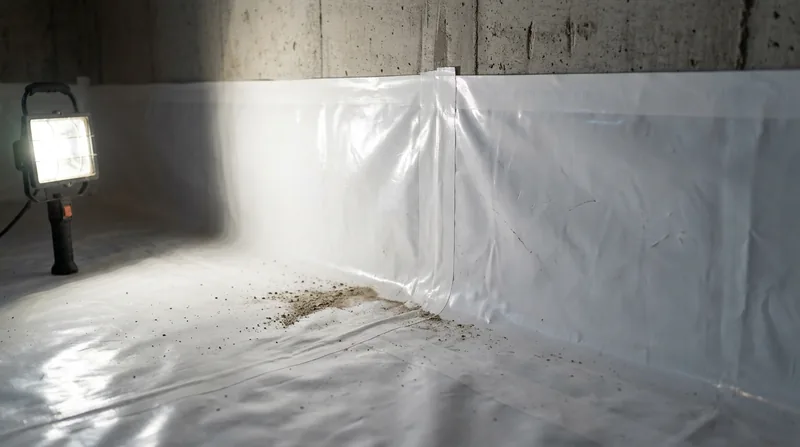




If your Peoria basement smells musty after a wet spring or the block walls sweat through the summer, ground vapor is likely moving through the concrete and stone. Vapor Barrier Installation in Peoria puts a heavy-duty sheet across the walls and slab to stop that moisture before it reaches the living space. Peoria sits on windblown loess silt over glacial clay, and that clay drains slowly, so water hangs around the foundation long after the rain stops. The bluffs on the west side, from West Bluff down through Peoria Heights, push runoff fast toward basement walls, while the flats in Richwoods and Averyville hold it in the soil. We install sealed, taped barrier systems sized to your basement, not a rolled-out sheet with open seams. Start with a free basement inspection so we can see where the vapor is actually coming from.
Why Vapor Barriers Matter in Peoria's Old and New Basements
Peoria's housing stock splits into two moisture problems. The 1890s to 1930s brick and stone basements in Downtown, Richwoods and Averyville pull ground vapor straight through porous mortar and unsealed block. The 1970s to 2000s poured basements in Northwoods and the newer edges of town are tighter but still wick moisture through the slab and cold joints. In both cases, the barrier is the layer that keeps the basement dry enough to finish or store in.
- Bare block and stone walls release vapor into the basement all summer, and a sealed barrier stops that path at the wall face.
- Uncovered slabs wick ground moisture upward, which is why a barrier runs across the floor as well as the walls.
- Open seams and untaped terminations let vapor bypass the sheet, so we seal every lap and penetration.
- Efflorescence on the lower block is a visible sign that moisture is moving through the masonry and a barrier is worth installing.
The result is a lower level that stays drier through humid stretches, with less musty odor and less surface condensation on cool walls.
Key info: A homeowner in Bartonville had white powder blooming across the bottom three courses of block every spring. The barrier went in over a cleaned wall with taped seams, and the efflorescence stopped returning the following season.
The Illinois Environmental Protection Agency publishes homeowner guidance on moisture and indoor environmental concerns that is worth a read before you finish a basement.
How We Install a Vapor Barrier in a Peoria Basement
We treat the barrier as part of the wall and floor system, not a plastic sheet tacked up in a hurry. The crew inspects the walls first, because a barrier over an active crack or a bowing wall hides a problem instead of solving it. If we find seepage at a crack or hydrostatic pressure at the cove joint, we tell you plainly and quote the right fix before the barrier goes up.
- We walk the basement with you and map damp spots, efflorescence and any crack or wall movement.
- We clean and prep the wall face and slab so the barrier bonds and sits flat.
- We cut and fit heavy-duty barrier sheets to the wall height and floor run, with a dimple board layer where drainage is needed.
- We seal every seam, lap and termination with compatible tape and adhesive, and integrate the barrier with the sump basin where one is present.
- We leave the job with a walkthrough of what was covered and what to watch for next wet season.
Where a basement already has an interior drain tile system, the barrier ties into the same perimeter so vapor and water are handled together.
Key info: In a 1950s ranch near Northwoods, the barrier was fitted around a sump basin and discharge line without cutting the sheet short, and the taped terminations held through the next spring melt.
Vapor Barrier Approaches We Use
The right approach depends on wall type, how wet the basement runs and whether you plan to finish the space. We match the system to the house rather than forcing one product onto every job.
| Approach | Description | Best for |
|---|---|---|
| Wall sheet barrier | Heavy-duty sheet sealed to the wall face with taped laps and terminations. | Block and poured walls with dampness but no active seepage. |
| Dimple board drainage layer | Drainage mat behind the barrier that channels water down to the perimeter drain. | Walls that stay wet and need a path for water, not just a vapor stop. |
| Slab barrier | Sheet laid across the floor with sealed seams and a finished edge at the cove. | Uncovered slabs that wick moisture into the room. |
| Sump-integrated barrier | Barrier fitted and sealed around the sump basin and discharge line. | Basements with an existing sump that still run damp. |
Each of these can be combined, and the inspection decides which combination your basement actually needs.
Vapor Barrier Installation Cost in Peoria: What to Expect
Pricing starts from $3 per square foot, and that figure covers the barrier material, surface prep, sealed seams and taped terminations on a straightforward wall and floor run. The number moves with wall height, the amount of prep work on old mortar or uneven block, and whether a dimple board layer or sump integration is added. A single damp wall in a Pekin ranch costs far less than a full perimeter in a tall Averyville basement. Get two or three written estimates and compare what is actually included, because a low number that skips seam sealing is not the same job.
Our full pricing overview breaks down the line items so you can see where the cost sits before you commit.
Hiring a Vapor Barrier Contractor Near Peoria: What to Check
Ask for the license and insurance certificate before anyone walks into your basement, and confirm the company carries both general liability and workers' compensation. Get at least two or three estimates in writing, and make sure each one names the barrier product, the seam and termination method, and what happens if active seepage is found under the wall. Ask for recent local references, especially on the same wall type as yours. Permits are commonly required for structural foundation work and for anything altering drainage or sump discharge connections, so confirm the contractor will pull what the local building department requires for your address. If you are in an HOA, check the rules on exterior discharge and grading changes before work starts.
We answer the phone at (309) 322-9378 and can walk you through the process before you book. Reach us through the contact page to set up a free inspection.
Vapor Barrier Installation Near Me: Signs You Need One
Most Peoria homeowners call when the basement smell changes or the walls stay damp after the spring thaw. The clay soil holds water late into the season, and the freeze-thaw cycle opens small paths through block and mortar that let vapor through year after year. If you see any of the following, a barrier is worth pricing.
- White efflorescence reappears on the lower block after every wet spring.
- The basement smells musty even when no standing water is visible.
- Cardboard boxes and stored items feel soft or damp against the wall.
- Condensation forms on cool block walls in humid summer weather.
A barrier addresses the vapor path, and where the wall is actively leaking, we route you to the right repair first. Call (309) 322-9378 or book a Vapor Barrier Installation in Peoria (61614) inspection to get a straight answer on what your basement needs.
Vapor Barrier Installation in Peoria: Pricing Guide
| Service | Price | Details |
|---|---|---|
| Wall sheet barrier | Starting at $3/sq ft | Includes surface prep, heavy-duty sheet, sealed laps and taped terminations on a standard wall run. |
| Slab barrier | Starting at $3/sq ft | Covers floor sheet, sealed seams and a finished edge at the cove joint. |
| Dimple board drainage layer | On estimate | Added where walls stay wet and need a drainage path behind the barrier. |
| Sump-integrated barrier | On estimate | Priced after inspection because fit around the basin and discharge line varies. |
| Travel | Included | In Peoria and surrounding areas, with no separate call-out or mileage fee. |
| Estimate | Free | Response within 24h at (309) 322-9378, no obligation to book. |
Indicative pricing, the exact cost depends on square footage, finish, and site access. Free personalized estimate within 24h at (309) 322-9378.


