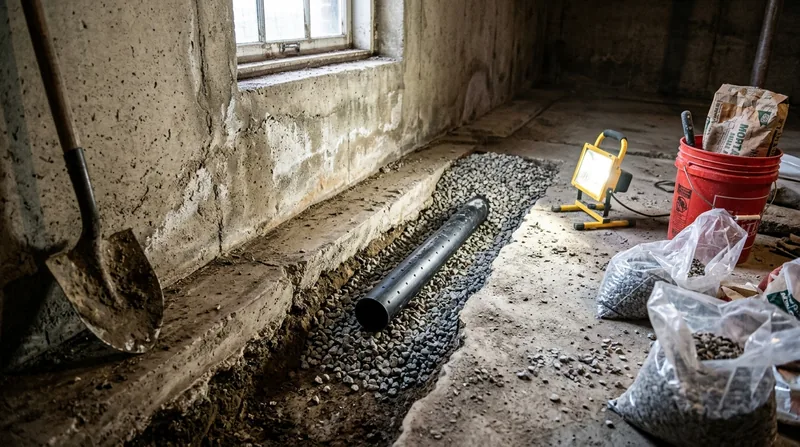




Interior Drain Tile System in Peoria: Stop Groundwater at the Footing
Peoria sits on windblown loess silt over glacial clay, and that clay holds water like a shallow pan all spring. If you own a 1920s bungalow in Averyville or a 1960s ranch in South Peoria, that water finds the path of least resistance: the seam where your wall meets the footing. An Interior Drain Tile System in Peoria captures that water at the footing, channels it to a sump basin, and pumps it out before it ever reaches your floor. We install these systems year-round, in any season, because the problem does not wait for good weather. If you are tired of a wet basement after every hard rain, start with a free basement inspection and we will tell you plainly whether drain tile is the right answer or simple crack sealing will do.
Why Peoria Basements Need Interior Drain Tile, Not Just a Bucket and a Mop
The west bluffs above the Illinois River, from West Bluff through Peoria Heights, shed runoff fast down steep ground toward foundation walls. Down in the flats, snowmelt and spring rains push the water table up into low basements with stone, brick, or early poured walls. Hydrostatic pressure builds under the slab, and no amount of interior patching stops water that is being pushed from below.
- You see efflorescence or white powder on the lower wall, which means water is moving through the masonry and drying on the surface.
- Your basement smells musty after rain, a sign that moisture is trapped and mold growth has started on framing or stored goods.
- Water pools along the wall-floor joint or seeps up through cracks in the slab after a hard storm.
- An old footing drain or weeping tile has silted shut, so groundwater has nowhere to go but in.
When you see those signs, the fix is below grade, at the footing, not on the wall surface. Homeowners in Peoria can verify contractor licensing and permit requirements through the State of Illinois and the local building department before any work begins.
Key info: A 1948 brick cottage in North Peoria had water on the floor every March for a decade. The walls were dry above grade, the downspouts were extended, and the grading was fine. The water was climbing through the footing joint from saturated glacial clay. An interior perimeter drain cut into the slab edge solved it, and the floor has stayed dry through three spring thaws.
How We Install an Interior Drain Tile System in Peoria
We do not guess. We walk the basement, check the wall-floor joint, test for moisture, and look at how the house sits on the lot. On the bluffs, that means looking at where runoff enters. In the river flats, it means checking how high the water table climbs in a wet spring. Then we lay out the drain path and the sump location before we cut anything.
- We set up plastic sheeting and negative air to keep dust out of your living space.
- We saw-cut a channel around the interior perimeter of the slab, about 12 inches wide, down to the footing.
- We remove the concrete and excavate a trench along the footing, keeping the bottom pitched toward the sump basin.
- We set a perforated drain tile in washed gravel, wrapped in filter fabric to keep silt out.
- We install the sump basin at the low point, connect the drain tile, and fit the pump with a check valve on the discharge line.
- We cover the trench with gravel and new concrete, then tie the discharge line out to a frost-free exit above grade.
Every system we install is tested with water before we close the trench, so you see it working before we leave. If your existing sump pump is old or undersized, we can pair the new drain with a sump pump installation sized for the volume your footing actually moves.
Key info: A ranch in Morton had a finished basement with carpet and drywall to the floor. We cut the perimeter channel, installed the drain tile and a new sump basin, and routed the discharge to daylight at the grade break. The homeowner kept the finished space and stopped pulling up wet carpet every April.
Interior Drain Tile vs. Other Waterproofing Approaches
Not every wet basement calls for the same fix. A single settling crack that seeps after rain may only need epoxy or polyurethane injection. A wall that is bowing needs carbon fiber straps or wall anchors before any drain work. The table below shows where interior drain tile fits compared with the other tools we use.
| Approach | Description | Best for |
|---|---|---|
| Interior perimeter drain tile | Perforated pipe set in gravel along the footing inside the basement, feeding a sump basin and pump. | Hydrostatic pressure under the slab, water at the wall-floor joint, wet floors in spring. |
| Exterior footing drain | Drain tile and waterproof membrane installed outside the footing after excavation. | Homes where the exterior is accessible and the wall itself needs membrane and parging. |
| Crack injection | Epoxy or polyurethane injected through ports into a single crack to seal it. | One or two isolated cracks with no evidence of broad hydrostatic pressure. |
| Drain tile repair | Clearing or replacing a failed existing footing drain or weeping tile run. | Older homes where a drain exists but is silted, collapsed, or daylighting poorly. |
| Vapor barrier and wall sealing | Dimple board or membrane on the wall plus a sealed floor covering to control humidity. | Humidity and musty smell once bulk water is under control. |
We tell homeowners in Chillicothe and Bartonville the same thing: if the water is coming up from below, seal the wall and it will find another way in. Drain tile is the answer when the pressure is under the slab.
Interior Drain Tile System Cost in Peoria: What to Expect
Most interior drain tile work in Peoria starts around $50 per linear foot, and that figure moves with the length of the run, the wall material, and how much concrete has to come out. A simple rectangular basement with clear access is at the low end. A basement with a finished ceiling, a furnace in the way, or stone rubble walls that need extra care pushes toward the high end.
We quote the sump basin, pump, check valve, discharge line, gravel, filter fabric, and concrete patching as part of the system, not as add-ons after the fact. If your discharge has to travel far to daylight, or the local building department requires a permit for the sump connection, that is a cost factor we identify up front. Get two or three estimates and compare what is actually included, not just the bottom-line number. Our full pricing overview lays out the ranges so you can compare apples to apples.
Finding an Interior Drain Tile System Contractor Near Me in Peoria
Waterproofing is below-grade work, and the contractor you hire will be cutting your slab and touching your foundation. Ask for proof of licensing and insurance before anyone walks in with a saw. Ask for references from jobs in Peoria, East Peoria, or Pekin, and call them. A contractor who does this work regularly will have no trouble producing both.
Permits vary by jurisdiction for work that alters drainage or the sanitary connection of a sump discharge, so confirm with the local building department what your address requires. Get at least three written estimates that spell out the drain length, sump basin size, pump model, and discharge route. Ask whether the quote includes permit fees and concrete patching. A transferable warranty on the system is worth asking about, and a reputable contractor will explain exactly what it covers and for how long.
If you want a straight answer about your basement, call Peoria Waterproofing at (309) 322-9378. We will inspect the basement, explain what we see, and give you a written estimate with no pressure to book.
Interior Drain Tile System in Peoria: Pricing Guide
| Service | Price | Details |
|---|---|---|
| Interior perimeter drain tile, standard basement | Starting at $50/linear ft | Includes saw-cut, trench, perforated tile, gravel, filter fabric, sump basin, and basic pump. |
| Interior drain tile with new sump pump and discharge | Starting at $65/linear ft | Adds a sized sump pump, check valve, and discharge line routed to a frost-free exit. |
| Drain tile repair or replacement of failed run | Starting at $45/linear ft | Clears or replaces a silted or collapsed existing footing drain where access allows. |
| Finished basement with ceiling or obstructions | On estimate | Finished ceilings, furnaces, and stone rubble walls need an on-site look before quoting. |
| Travel | Included | In Peoria and surrounding areas, no separate call-out or mileage fee. |
| Estimate | Free | Response within 24h at (309) 322-9378, no obligation to book. |
Indicative pricing, the exact cost depends on square footage, finish, and site access. Free personalized estimate within 24h at (309) 322-9378.


