The Geology Under Your Feet: Loess Silt and Glacial Clay in Peoria
If you live in Peoria, the ground beneath your home is not ordinary dirt. Much of the region sits on a thick layer of loess silt, a wind-blown deposit left behind after the last glaciers retreated. Loess is made of fine, powdery particles that hold together well when dry but lose strength quickly when wet. Underneath the loess, you will often find glacial clay, a dense, heavy soil that expands when it absorbs water and shrinks as it dries. This combination creates a cycle of Peoria soil movement that puts constant stress on foundations.
Understanding this geology matters because it explains why so many homes in the area develop Foundation Waterproofing issues that are not the homeowner's fault. The soil is not stable, and it does not behave the same way from one season to the next. A dry summer can pull moisture out of the clay, causing it to contract and leave gaps around your foundation. Then fall rains fill those gaps, and the cycle starts again. Over years, that repeated expansion and contraction is enough to crack concrete and open seams in block walls.
Why Peoria Foundation Cracks Appear and What They Mean
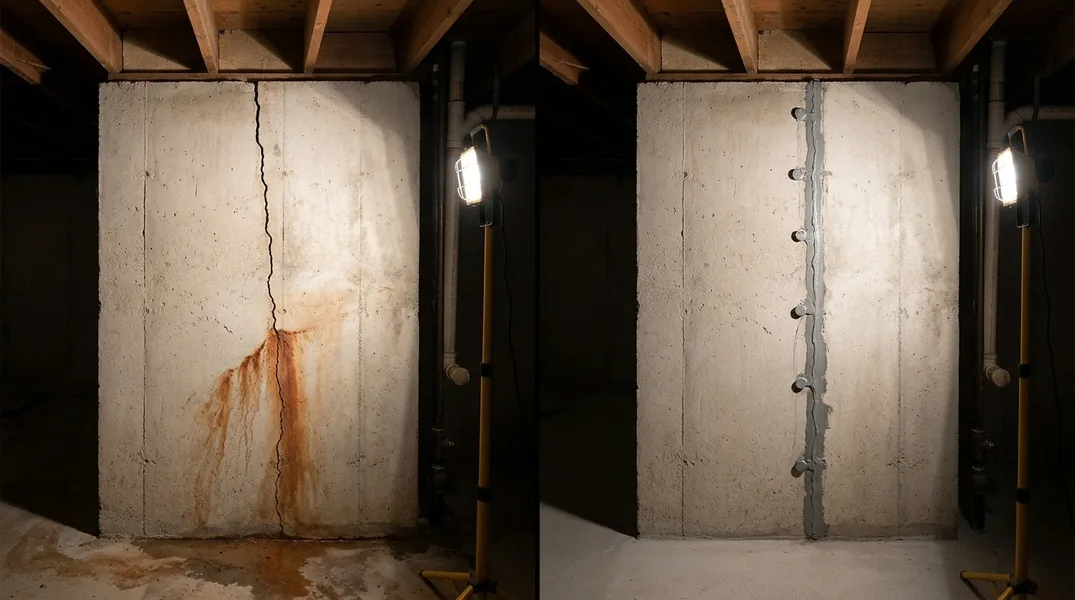
Not every crack is a crisis, but in Peoria, Peoria foundation cracks deserve attention because of how the local soil behaves. Hairline cracks in poured concrete are often just shrinkage cracks from the curing process. However, when you see horizontal cracks in a block wall, stair-step cracks at the corners, or cracks that widen over time, those are signs of soil pressure pushing against the foundation. The loess silt can wash out and leave voids, while the clay swells and presses inward. Your foundation is caught in the middle.
It also helps to know what to look for inside the basement. Cracks that let in daylight, walls that bow slightly, doors that stick at the top corners, and white powdery deposits called efflorescence are all clues that moisture and soil movement are at work. If you notice any of these, it is worth getting a professional opinion before the next wet season. Small cracks can be repaired, but ignoring them usually leads to bigger problems and higher repair bills down the road.
Clay Soil Basement Leaks: How Water Finds Its Way In
Clay soil basement leaks are one of the most common calls we get in Peoria. Glacial clay does not drain well. When it rains, water pools on top and against your foundation instead of soaking away. That water builds hydrostatic pressure, which is a fancy way of saying the weight of the water pushes against your basement walls. It finds the weakest point: a crack, a cold joint, a tie rod hole, or the seam where the wall meets the footing. Once water gets in, it can soak insulation, warp drywall, and create a damp environment that invites mold.
The fix depends on where the water is coming from. Sometimes the answer is improving drainage around the foundation, such as grading and downspout extensions. In other cases, an Interior Drain Tile System is the right approach because it captures water at the footing and directs it to a sump pump before it ever reaches your floor. For homes where the problem is outside, Exterior Basement Waterproofing can seal the wall and relieve pressure from the soil side. A good contractor will evaluate your specific situation rather than pushing one solution for every home.
Basement Waterproofing Near Me: When to Call a Professional
Many homeowners in Peoria try to handle basement moisture with a dehumidifier or a coat of sealant from the hardware store. Those steps can help with minor dampness, but they do not address the root cause, which is usually the soil and water pressure outside the wall. If you are seeing water on the floor after heavy rain, noticing musty odors, or watching a crack get wider, it is time to call a professional. The longer you wait, the more likely it is that the damage spreads to framing, flooring, and stored belongings.
When you search for basement waterproofing near me, look for a local company that understands the specific soil conditions in the area. A contractor from outside the region may not realize how much the loess silt and glacial clay affect foundation performance. Ask questions about how they diagnose the problem, what solutions they recommend, and whether they offer a written free estimate. A thorough inspection should include the interior walls, the floor, the exterior grading, and the downspouts. If a company gives you a price without looking at those things, keep looking.
Basement Waterproofing Cost in Peoria: What to Budget
Homeowners often ask about pricing before anything else, which is completely reasonable. The honest answer is that basement waterproofing cost in Peoria varies based on the size of the basement, the type of foundation, the severity of the water problem, and the solution chosen. A simple crack injection is far less expensive than a full interior drain tile system with a sump pump. Exterior work costs more because it involves excavation, but it can be the right long-term fix for certain homes. Most companies offer a range after an inspection, and you should expect that estimate to be in writing.
It also helps to think about cost in terms of what you avoid. Water damage repairs, mold remediation, and structural foundation work are almost always more expensive than preventive waterproofing. If you are comparing quotes, make sure each one covers the same scope of work. A low price that only seals a crack may not solve the water problem if the real issue is hydrostatic pressure. Ask about warranties, and ask what happens if the problem returns. A reputable contractor will stand behind the work and explain the terms clearly.
Protecting Your Home from Peoria Soil Movement
You cannot change the geology of Peoria, but you can manage how water interacts with your foundation. Start with the simple things: keep gutters clean, extend downspouts at least six feet away from the house, and make sure the soil slopes away from the foundation on all sides. These steps reduce the amount of water that reaches the clay and loess around your basement. They are not a substitute for professional waterproofing, but they make a real difference in slowing soil movement and reducing pressure on your walls.
If you live in East Peoria, Pekin, or Morton, the soil conditions are similar, and the same advice applies. The best time to address foundation cracks and basement leaks is before the next heavy rain, not after. A professional inspection gives you a clear picture of what is happening and what it will take to fix it. Call Peoria Waterproofing at (309) 322-9378 to schedule a free estimate and get peace of mind about your home's foundation.
Looking for a professional basement waterproofing contractor in Peoria? Peoria Waterproofing responds fast for all your basement waterproofing needs.
Get a Free QuoteOur services: Basement Waterproofing · Interior Drain Tile System · Exterior Basement Waterproofing