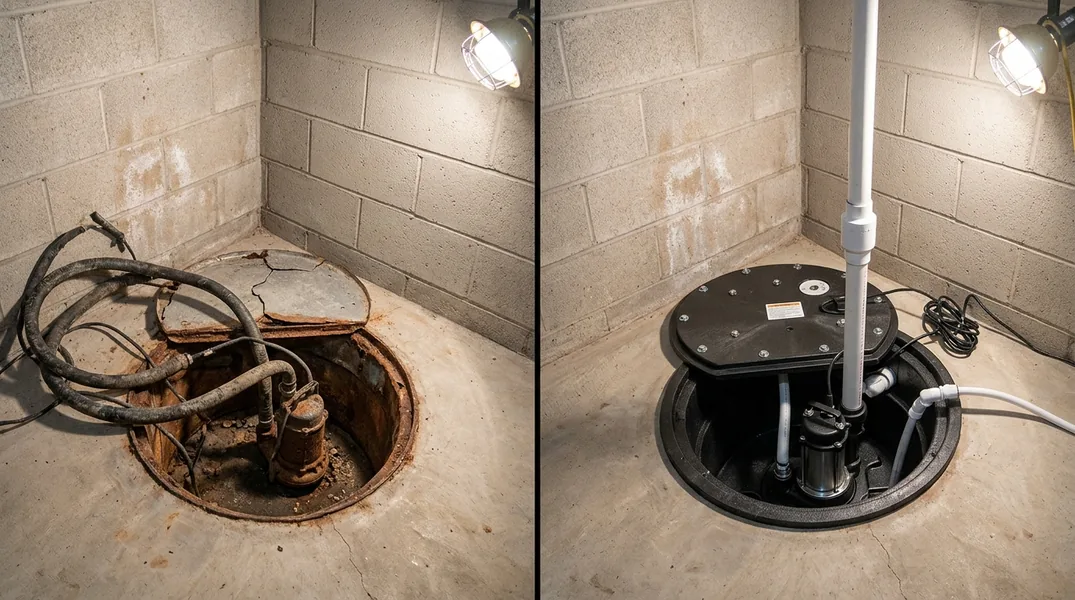
Why Spring Rain Puts Your Sump Pump to the Test in Peoria
Spring in Central Illinois brings a predictable rhythm: snow melts, the ground thaws, and the rain arrives in waves. For homeowners in Peoria, that combination can send a surprising volume of water toward your foundation. The soil around your home becomes saturated, and hydrostatic pressure builds against basement walls. Your sump pump is the last line of defense, and it has likely been sitting idle for months. That idle time is exactly when small problems develop unnoticed.
A sump pump that ran fine last spring may not start at all this year. Float switches stick, impellers clog with sediment, and discharge lines freeze or crack. The first heavy rain of the season is the worst possible time to discover a failure. Proactive sump pump maintenance in early spring, before the ground is fully thawed and the storms begin, is far cheaper and less stressful than emergency repairs after water has already entered your basement. Think of it as a seasonal tune-up for the hardest-working appliance in your home.
Sump Pump Maintenance Checklist Before the Rainy Season
Start with the basics you can handle yourself. Unplug the pump and remove the lid from the sump pit. Look for debris, silt, or gravel that may have collected around the float. Clean the pit and check that the float moves freely. Then plug the pump back in and slowly pour a bucket of water into the pit to trigger the float. The pump should kick on quickly and empty the pit without unusual noise or vibration. If it hesitates, rattles, or runs continuously, that is a warning sign worth investigating before the next storm.
Next, inspect the discharge line and the sump pump check valve. The check valve is a small but critical component that prevents water from flowing back into the pit after the pump shuts off. A failed check valve causes the pump to cycle repeatedly, which shortens its life and can leave standing water in the pit. Make sure the valve is installed correctly, is not clogged, and is rated for your pump's flow. Also confirm the discharge line slopes away from your foundation and does not terminate near a window well or back into the basement. If your setup looks questionable, a professional evaluation can save you from a preventable flood.
Battery Backup Sump Pump: Your Safety Net When the Power Fails
Spring storms in Central Illinois often arrive with lightning and high winds, and power outages are common exactly when you need your sump pump most. A battery backup sump pump is not a luxury; it is essential protection for any finished or semi-finished basement. The backup system runs on a charged battery and takes over automatically if the primary pump fails or the electricity goes out. Without one, a single prolonged outage during a heavy rain event can result in inches of water across your floor.
Maintaining the backup is just as important as maintaining the primary pump. Test the battery every few months, check the water level in flooded-cell batteries, and replace the battery according to the manufacturer's schedule, typically every three to five years. Many modern backup systems also include alarms and remote monitoring, so you know if something is wrong before water reaches your belongings. If you are unsure whether your current backup is adequate for the spring rain basement risks in your neighborhood, a quick inspection from a local pro can give you peace of mind. Call Peoria Waterproofing at (309) 322-9378 to schedule a check.
Storm Basement Flooding: When Maintenance Is Not Enough
Sometimes maintenance reveals deeper issues. If your sump pump runs constantly during moderate rain, if water seeps through floor cracks or wall joints despite a working pump, or if you notice efflorescence or musty odors, the problem may go beyond the pump itself. Storm basement flooding often points to inadequate drainage around the foundation or a need for a more comprehensive solution. In those cases, Basement Waterproofing addresses the source of the water rather than just the symptom.
Two common upgrades are an Interior Drain Tile System, which captures water at the footing and directs it to the sump pit, and Exterior Basement Waterproofing, which tackles hydrostatic pressure from the outside. If your foundation shows signs of movement or chronic dampness, Foundation Waterproofing may be the right next step. Homeowners in East Peoria and Pekin face the same soil and storm conditions, so the advice applies across the region.
Sump Pump Maintenance Near Me: Choosing a Local Pro in Peoria
If you are searching for sump pump maintenance near me, you want someone who knows the local soil, the typical storm patterns, and the building styles in the area. A local technician can spot issues that a national franchise might miss, such as a discharge line that runs to a spot where water pools against the foundation or a pit that is undersized for the volume of water your lot receives. Regular service typically includes testing the pump, cleaning the pit, checking the check valve, inspecting the discharge line, and verifying the backup system.
Peoria Waterproofing serves homeowners throughout Morton and the surrounding communities with honest assessments and practical recommendations. If you would like to know what service involves, you can review our pricing or request a free estimate before the spring rains arrive. A little preparation now can prevent a very expensive cleanup later.
A Simple Spring Routine That Protects Your Basement
Make sump pump maintenance a fixed part of your spring routine, just like changing furnace filters or cleaning gutters. Test the pump with water, inspect the check valve, confirm the discharge line is clear and properly directed, and verify that your battery backup is charged and ready. Keep the sump pit lid secure and the area around it clear so the float cannot get snagged. These steps take less than an hour and dramatically reduce the chance of a failed pump during a storm.
If anything looks worn, noisy, or unreliable, do not wait for the next heavy rain to find out whether it will hold. Contact Peoria Waterproofing at (309) 322-9378 or visit the website to schedule an inspection. Protecting your basement starts with a pump that is ready before the first storm, not after the water is already inside.
Looking for a professional basement waterproofing contractor in Peoria? Peoria Waterproofing responds fast for all your basement waterproofing needs.
Get a Free QuoteOur services: Basement Waterproofing · Interior Drain Tile System · Exterior Basement Waterproofing